
Monk fruit extract passes through roughly seven controlled stages before it reaches a drum: harvest and curing, crushing, hot water extraction, removal of protein and pectin, resin adsorption and ethanol desorption, vacuum concentration, and spray drying. The Mogroside V percentage printed on your specification sheet is decided in the middle of that line, in the purification stage, long after the fruit has left the field. This article walks the fruit through each stage, shows which stage controls which attribute in the powder you receive, and converts the word premium into acceptance criteria you can put on a purchase order.
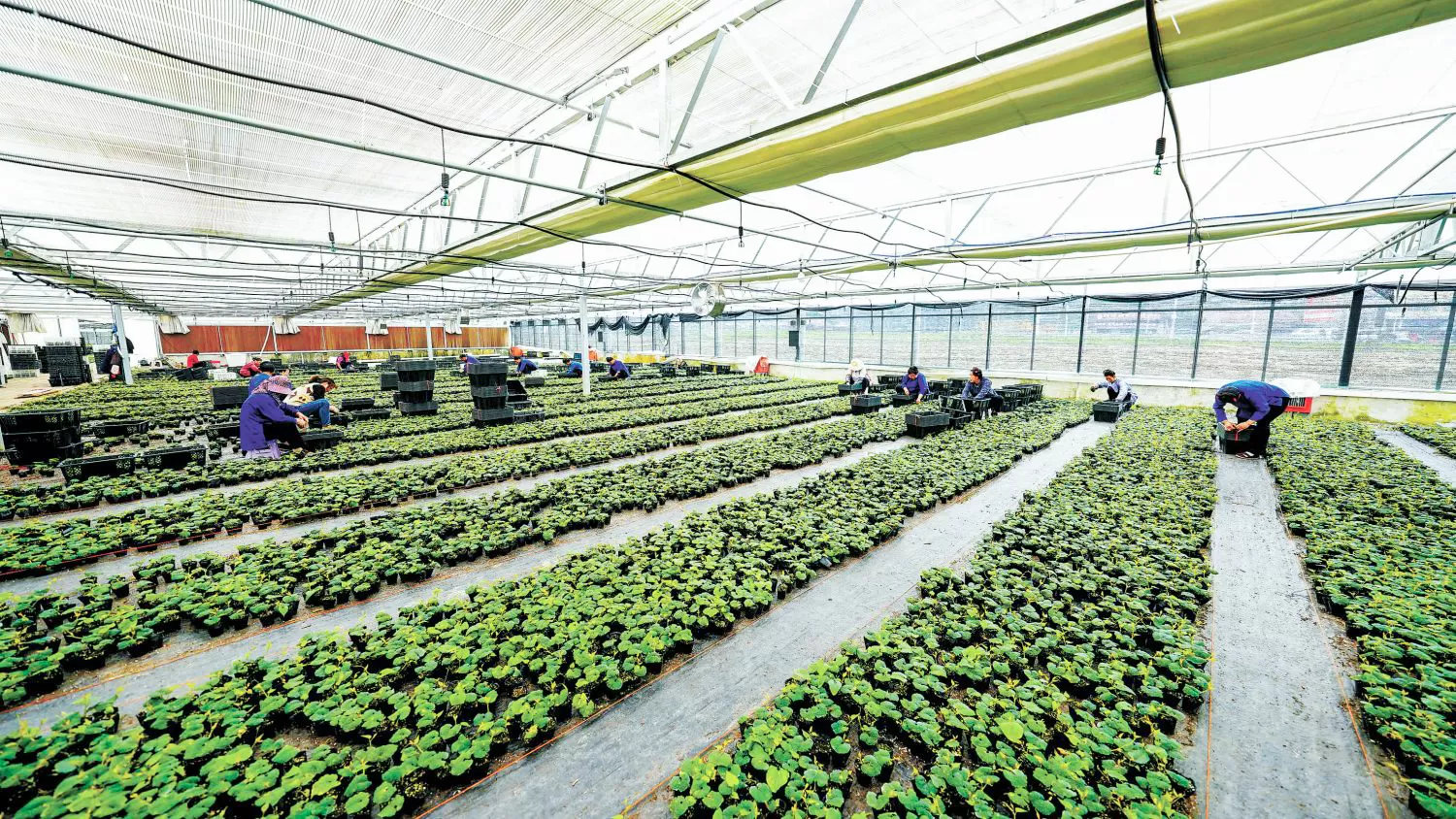
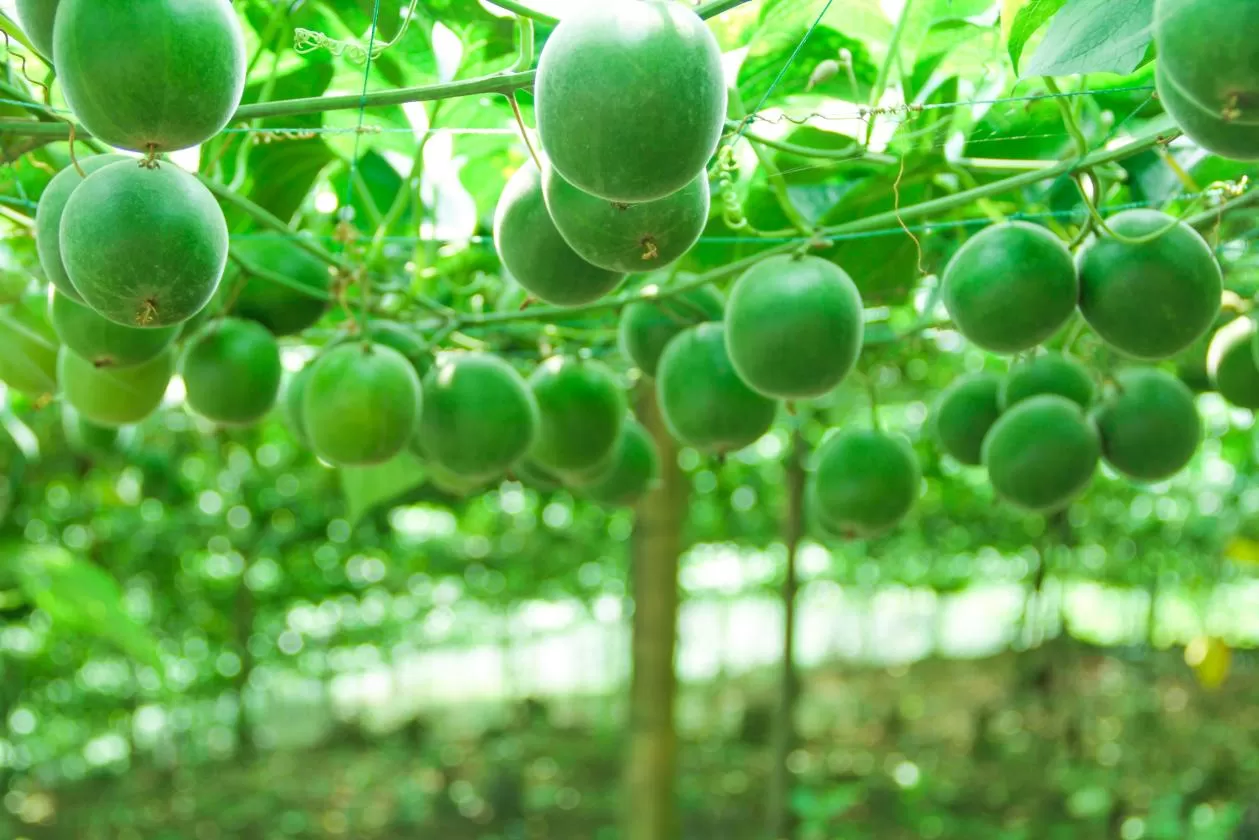
Fresh monk fruit arrives in one autumn window, and the whole year's quality is fixed inside it. In one recent season Huacheng Bio purchased 28,000 tonnes of fresh fruit between September and October, with intake continuing to the end of January and total harvest volume expected at 60,000 tonnes. The fruit does not store well: about 20 days at room temperature, no more than seven days under refrigeration, and a cracked shell accelerates internal spoilage and mould.
Curing matters more than buyers usually assume. Freshly picked fruit holds a lot of water and its sugars are not fully converted, so baking it immediately risks bursting and leaves the sweetness under-developed. The standard practice is to hold the fruit in a ventilated, dry, cool place for about seven to ten days until moisture falls to 10 to 15% of fruit weight. Fruit rushed into the dryer carries flat sweetness and cooked notes into the extract, and no purification step downstream can put sweetness back.
Two ratios then decide how much sweetness a tonne of fruit can yield: how much mogroside the fruit contains, and how much of it the process recovers. Huacheng Bio raised the average mogroside content of its fruit from 0.35% in 2005 to 0.43% in 2018 and to 0.65% in 2025, while extraction yield moved from 85% to 95% per 100 kg of fruit.
The published manufacturing description submitted to Food Standards Australia New Zealand records a multi-stage solid-liquid extraction from mechanically crushed or shredded pulp, with the extract solutions from each stage combined. Protein compounds are then precipitated by heating to 100 °C and removed by centrifugation, and filtration removes pectin. Huacheng Bio describes its own route in similar terms, using water extraction supported by enzyme-assisted extraction, membrane filtration, and low-temperature concentration.
The trade-off at this stage is yield against impurity load. Hot water dissolves the mogrosides, and it also dissolves sugars, proteins, pigments and tannins. Push extraction harder to lift recovery and you pull more colour and flavour bodies into the solution, which the resin and polishing stages then have to remove at the cost of capacity and yield. Extract more gently and recovery falls. Two suppliers can run comparable fruit under different extraction regimes, and the difference surfaces as colour and flavour load in the finished powder, not as the assay number.
According to the same regulatory assessment, the clarified solution passes over a food-grade copolymer resin column that adsorbs the mogrosides while salts and sugars pass through and are discarded. The target compounds are released with a food-grade 60% ethanol solution, followed by distillation to remove the ethanol. A second resin pass adsorbs unwanted non-triterpene glycosides and lets the desired triterpene glycosides through, which also decolours the solution.
This is the stage that turns roughly 0.4% mogroside in fruit into a commercial ingredient. Huacheng Bio's H2-Luo range spans 1.5% to 98% Mogroside V, offered at V20, V25, V40, V50, V55 and V90, and the published colour values track that purification: light yellow at V20, pale yellow to off-white at V40, and white at V90. Mogroside V percentage is therefore an outcome of how far the material was taken through purification, and it says nothing about the fruit it came from.
Ethanol is worth noting on the enquiry. The desorption step uses it, and distillation, vacuum concentration and spray drying are what remove it. Residual solvent belongs on the certificate of analysis. If your market or your customer sets a residue limit, state the limit in the first enquiry so the supplier can quote against it.
The regulatory assessment describes vacuum concentration of the purified solution to approximately 20% solid content, which also removes most of the remaining ethanol, followed by spray drying at 120 °C to form a dry powder and strip the final traces of ethanol and most of the water. Huacheng Bio describes low-temperature drying on its own lines to preserve the bioactive compounds, with the finished material milled to pass 80 mesh.
Heat is not the enemy of the sweet compound. The stability data submitted with the same application found the sweetness components were not significantly affected by heat treatment at 120 °C, and a table-top sweetener containing 0.8% monk fruit extract and 99.2% sugar alcohol remained stable when held at 120 °C for up to six hours. That supports hot fill, UHT and many baking applications. Confirm it in your own matrix at your own time and temperature, because pH, solids and the rest of the formula all change the outcome.
Handling is the other half of this stage. Huacheng Bio ships in moisture-resistant, nitrogen-filled packaging, which tells you the powder is managed as a moisture-sensitive material. Shelf life, storage conditions and pack weights for the finished extract are not published, so ask for all three, along with whether the supplier works to an expiry or a retest convention.
Ask for a certificate of analysis from a recent commercial lot, with the lot identifier repeated on any sample you receive, plus the HPLC method and the reference standard behind the assay. Huacheng Bio runs sensory, physical and chemical, microbiological and precision-instrument laboratories equipped with HPLC, GC, AA and UV-VIS, and sends product to third-party laboratories including NSF, SGS and Eurofins on a scheduled basis. Ask which tests were run in-house and which were sent out for the lot you are buying.
Request each certificate you depend on with its issuing body, scope, validity dates and the site it covers. The certificates Huacheng Bio holds include NSF-cGMP, ISO9001, ISO22000, BRC, SC(QS), TUV, GRAS, Non-GMO Project, KOSHER and HALAL, and the scope of any one of them may or may not reach the grade and the plant you are sourcing from.
The H2-Luo range carries a free sample offer of 10 to 20 g or an amount sufficient for testing. That quantity answers a defined formulation question and does not qualify a commercial supply. Confirm the grade, lot identification, freight responsibility and eligibility before you build a trial schedule around it, and keep the lot identifier with your sensory notes so a later commercial lot can be matched to the sample that passed.
Finally, ask when quoted lead time starts. Fruit arrives in a single autumn window and processing capacity is sized in fresh fruit tonnes, so the interval between order, sample approval and shipment deserves the same scrutiny as the specification itself.
Send the grade you are considering, the application, your process temperature and pH range, and the market you will sell in. Huacheng Bio can supply the current specification and a recent certificate of analysis for that grade, confirm pesticide residue and solvent testing, and arrange a sample with its lot identifier attached.
Request a specification and sample reviewThe assay measures one marker compound. Flavour comes from what else survived purification: minor mogrosides, residual fruit sugars, pigments and tannins. Those are set by how hard the fruit was extracted and how far the solution was polished, so two materials can share an assay value and differ in colour and aftertaste. Compare at matched sweetness in your own base, and ask for a sensory description alongside the certificate of analysis.
Higher purity gives a whiter powder, a cleaner flavour and a lower addition rate, and it costs more per kilogram and demands tighter weighing control at very low inclusion. A mid-grade material can be the better economic choice where the formula already carries colour and flavour, such as in a juice concentrate or a baked product. Work out the delivered cost of the sweetness needed for one finished unit before deciding.
The stability data submitted for the Australian and New Zealand assessment found the sweetness components were not significantly affected by heat treatment at 120 °C, and a table-top format held at that temperature for six hours stayed stable. That is a strong starting point for hot fill, UHT and baking. Confirm it in your own matrix at your own time, temperature and pH, because the rest of the formula changes the result.
Food Standards Australia New Zealand used the Food Chemicals Codex monograph published by the United States Pharmacopeial Convention as its purity reference and added statutory contaminant limits where needed. In China, pesticide residues on the H2-Luo concentrated juice are stated as conforming to GB2763 and USP36. Name the standard you are testing against in the enquiry so the supplier quotes a limit you can actually audit.
Ask for the specification for the exact grade, a certificate of analysis from a recent commercial lot, the HPLC method and reference standard, the lot identifier, and the contaminant and microbiological panel for your market. Huacheng Bio's quality system covers in-house laboratories and scheduled third-party testing through NSF, SGS and Eurofins, so ask which results came from where.







 EN
EN EN
EN CN
CN ES
ES PT
PT SV
SV DE
DE TR
TR FR
FR AR
AR BG
BG HR
HR CS
CS DA
DA NL
NL FI
FI EL
EL HI
HI IT
IT JA
JA KO
KO NO
NO PL
PL RO
RO RU
RU CA
CA TL
TL IW
IW ID
ID LV
LV LT
LT SR
SR SK
SK SL
SL UK
UK VI
VI SQ
SQ ET
ET GL
GL HU
HU MT
MT TH
TH FA
FA AF
AF MS
MS GA
GA BE
BE UZ
UZ